


12/09/2024
0 Comments
Family Book, goodbye to the paper format
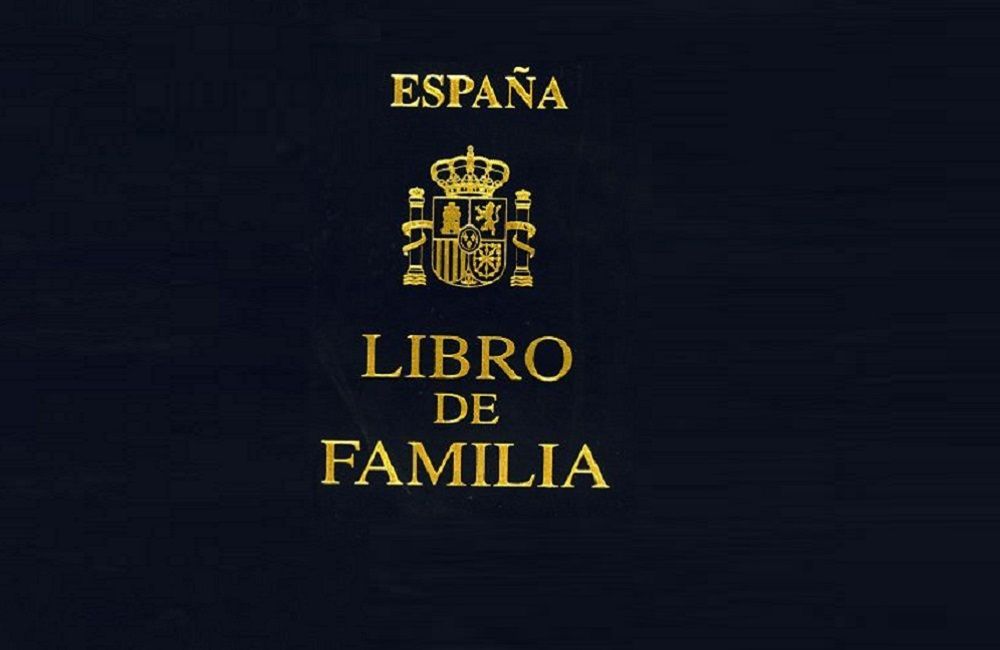
Family Book: Goodbye to Paper. The paper Family Book will no longer be issued starting today, April 30th. This document, which has accompanied Spanish families for over a century, will now be replaced by an individual digital record assigned at birth and accessed online with a password...
Family Book: Goodbye to Paper. The paper Family Book will no longer be issued starting today, April 30th. This document, which has accompanied Spanish families for over a century, will now be replaced by an individual digital record assigned at birth and accessed online with a password.
Thus, Law 20/2011, of July 21, on the Civil Registry, comes into force, which eliminates the traditional system of dividing the Civil Registry into sections -births, marriages, deaths, guardianships and legal representations- and creates an individual digital registry for each person with a personal code -consisting of the alphanumeric sequence assigned by the current computer system for the national identity document- and with which they can carry out all procedures in their registry electronically.
REGULATORY
This 2011 regulation stipulates, in Article 5, that the personal registry "shall contain the facts and acts relating to identity, civil status, and other circumstances." It also states that the registry shall be opened at birth "or with the first entry made." And that in said registry "all facts and acts that have access to the Civil Registry shall be recorded or noted, continuously, successively, and chronologically."
As for foreigners, the law also establishes that the acquisition of Spanish nationality by residence, naturalization and option, as well as its recovery and declarations of intent relating to residency, will be registered in the individual register.
This digital registry will also record emancipation and the granting of legal majority, events affecting parent-child relationships, court declarations modifying legal capacity, and placement under guardianship by a public entity. Acts related to the protected assets of persons with disabilities are also registrable. Registration of death will close the individual registry.
Family Books issued prior to the entry into force of this new law will continue to have the effects provided for in Articles 8 and 75 of the Civil Registry Law of June 8, 1957, as specified by the law.
FEWER MARITAL DISPUTES
This new regulation is advantageous for citizens and prevents the Family Book from becoming a source of controversy between spouses in separation and divorce proceedings. The Family Book is not required to accompany a divorce petition, but it is sometimes used as a weapon. It is a document that is normally requested for certain procedures, especially those involving minor children, and in divorces, it causes many problems. The spouse who keeps it used to refuse to give it to the other. This stalls the process, so being able to access the data electronically makes everything much easier.
The Family Book has lasted 106 years. Its origin dates back to 1915, during the reign of Alfonso XIII. It was established with a pragmatic aim: to group all the information relating to a family into a single document.
Foreigners in Spain